One year of learning a new language from scratch
10.10.2025 – 10.10.2026
As I am getting ready to visit Monet’s house in Giverny, I decided to make the most of the peace and quiet of this early-October morning and sit down with a post I first wrote for my Instagram account almost a month ago. This time, I decided to give it a new form here, on this blog. Mostly because I would like to hold on to this moment a little longer and keep it as a small keepsake dear to my heart.
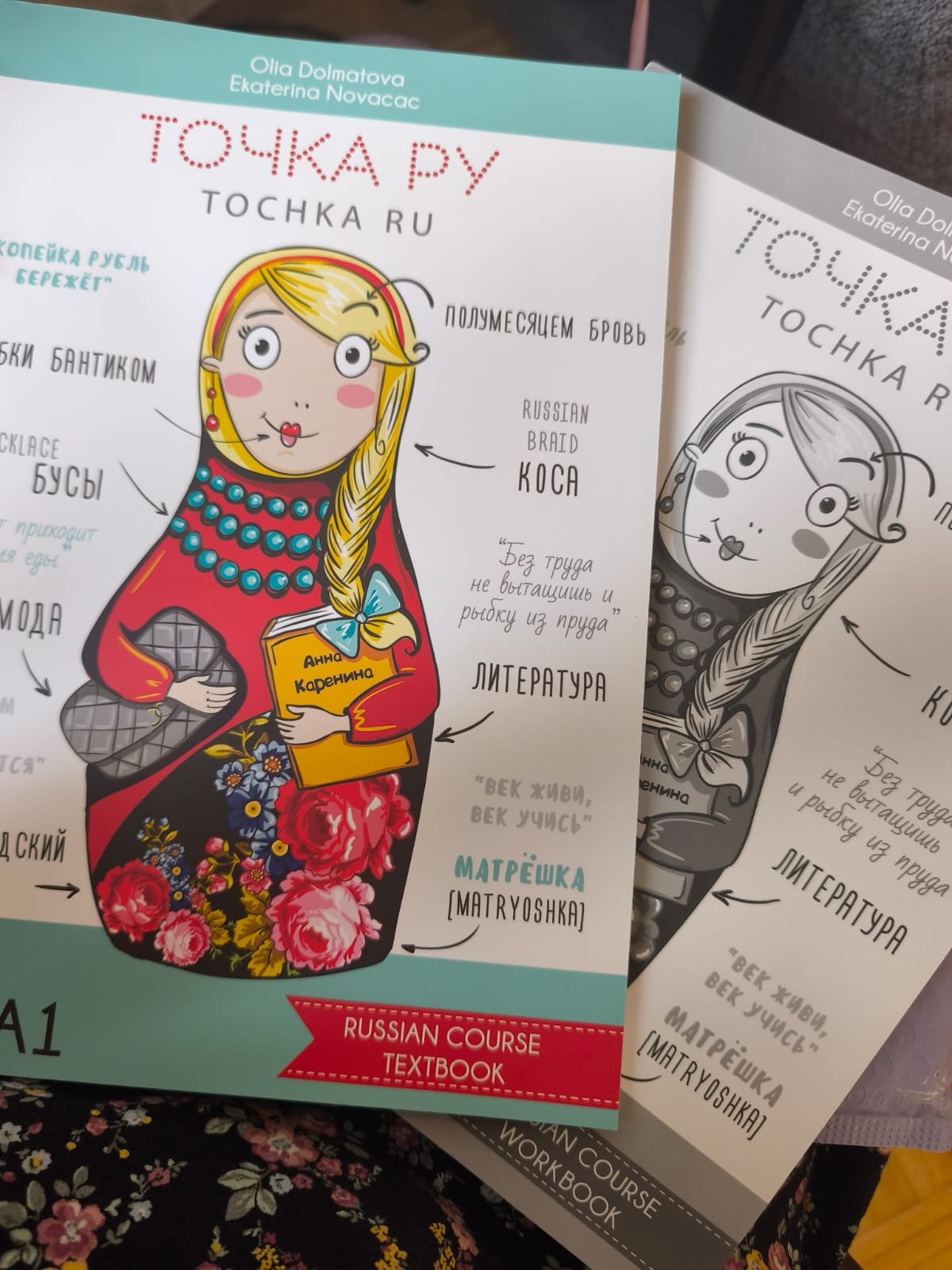
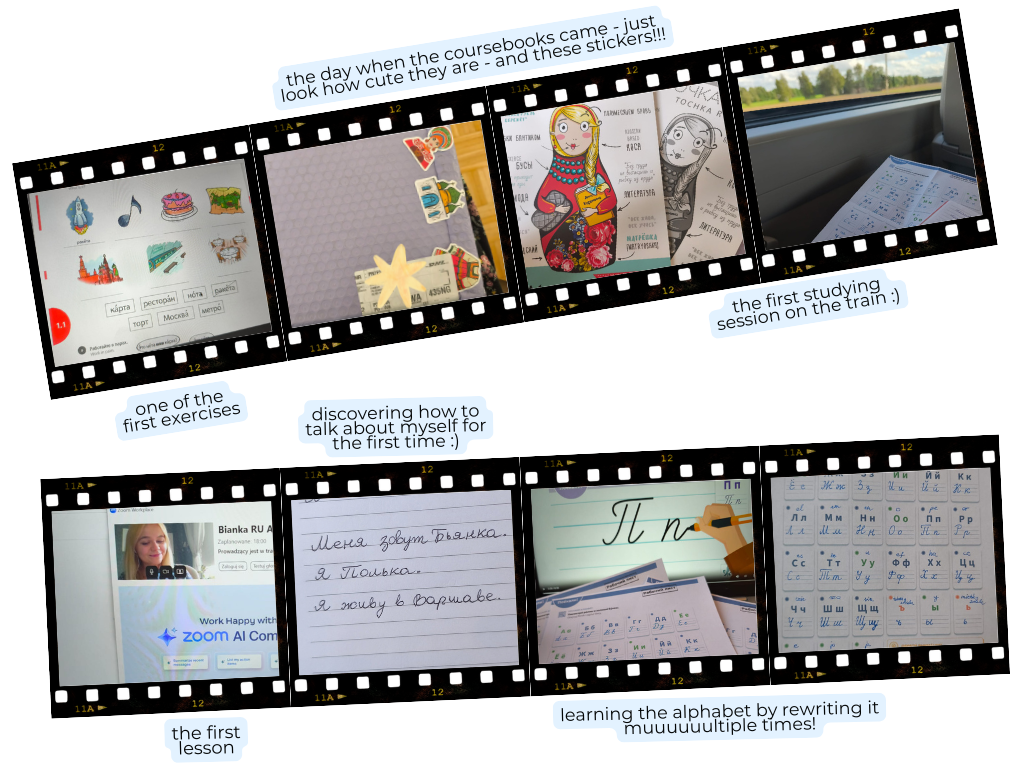
So, one year ago, on the 10th of September, I started learning Russian with @kolej_na_wschod, and I am sooo happy to be able to continue this journey this year.
Learning this language has been an invaluable experience, filled with fascinating discoveries about languages, learning, society and myself every single week. It came into my life as a wonderful surprise, opening doors to so many new worlds and perspectives all at once. And ever since, I have found myself wanting to explore it more and more. 💙
Now that a full year has passed since I started learning Russian, I decided to – not so surprisingly – reflect (yes, again…) on some of the linguistic and psychological lessons I have learnt along the way. Choosing just a few was NOT easy, but here we are, with 9 lessons that have stayed with me after this first year of learning Russian.
#ReflectionsCorner – 9 reflections!
#1 Each language has a different learning process
Normally, reading used to be my strength. I could struggle with listening and speaking in other languages, but reading was my safe space – I had time, I could read quietly, reread when needed, use my analytical thinking…
Well, in Russian, reading became my biggest challenge. I would sit in front of a text and sometimes it felt as if the letters were jumping before my eyes and I couldn’t make out the words. A different writing system completely changes the way we learn. We switch from guessing to deciphering and reading becomes slow and arduous.
On the other hand, pronunciation would usually get quite a lot of my attention from the very beginning. Here, even though word stress is different and some sounds are new, I felt that even if I pronounced the words in a “Polish way”, I would still be understood. As a result, pronunciation became more of a background focus during my first year of learning.
#2 Similar languages can create a false sense of knowing
You read a word and guess its meaning. You discover a declension pattern and it seems similar to one in your own language. You finish the lesson thinking you know it all – but if someone asked you to reproduce it from memory, you probably wouldn’t be able to.
You haven’t memorised the spelling, the exact word endings or the pronunciation.
When a language is completely different, we tend to learn every new word one by one. But when something already looks familiar, our brain automatically ignores it. It’s a tricky mechanism and it is easy to get deceived by it.
#3 Knowing the rule doesn’t mean applying it
You can know perfectly well that a rule exists and still fail to apply it in real time. You remember that an unstressed “о” is pronounced like “а” and that “е” after “ж” is pronounced differently, but when speaking, you still get them wrong. Speaking or reading aloud adds an extra layer of processing and knowledge that seemed solid suddenly becomes much less automatic.
It also helps me understand my students better. When they repeat the same mistake, they might know perfectly well what they did wrong – they just haven’t practised the correct form enough for it to become automatic.
#4 Switching between alphabets is like switching between keyboards
Switching between Latin and Cyrillic alphabets sometimes feels like switching between QWERTY and AZERTY on your keyboard. The alphabets are different and yet contain some letters that look very similar (P, H, R, C, X, B, etc.).
When I switch between AZERTY and QWERTY to type in both French and Polish, I sometimes don’t know which keyboard I’m currently using. It makes my brain burn. The letters are the same, just in different places, so I keep having these little glitches.
The same goes for Russian. I find myself writing “p” instead of “r” when taking notes in English, and then, during a Russian lesson, I look at “р” and read it as “p” instead of “r.” As if your brain were constantly lagging and running into errors.
#5 Printed text is easier to read than the handwritten one
For the first time, I paid so much attention to handwritten language. The first step was learning to recognise the printed letters. Then, I discovered their handwritten forms – and they felt like a completely new alphabet… “т” became “m”, some letters would look completely different in their uppercase and lowercase forms, and “ш”, “и” and “м” seemed to turn into one long wave when placed next to each other…
I noticed that I found it easier to read printed text than my own handwritten notes. Interestingly, writing those notes was much faster and more automatic than reading them afterwards.
It felt as if my hand had learnt the movements mechanically, while my brain was still expecting the printed forms of the letters whenever I looked back at what I had written.
#6 Speaking for accuracy is powerful
Using newly learnt words in speaking gives you a sense of agency, a feeling of progress and a sense of achievement.
Language courses tend to valorise speaking for fluency, encouraging learners to speak freely and build elaborate, creative answers.
But sometimes, manipulating the linguistic tools we already have within safe limits can be just as valuable. It helps build a sense of safety and confidence and makes you realise that you already know quite a lot – and, more importantly, you know how to put it into practice.
#7 A new language needs a new voice and identity
You know how to pronounce it, but it just feels… weird? Hearing yourself say something in a way that somehow doesn’t sound like you anymore.
It can be hard to mimic new accents and sounds when your identity in that language hasn’t been constructed yet. Learning pronunciation isn’t only about training your mouth and ears. Sometimes, there is a tiny identity clash before this new version of your voice starts feeling like your own.
#8 Progress isn’t linear and it might be frustrating
This was probably the hardest lesson I learnt – and the one that changed my perspective on language learning the most.
You study for months and then suddenly struggle to read the simplest phrase. Letters seem to merge into one, reading aloud takes so much effort that comprehension disappears and mistakes you thought you’d overcome come back.
It can feel like you’re stuck despite all the time and effort you’ve put in.
But self-doubt doesn’t mean you’ve gone backwards. Sometimes, progress is happening beneath the surface long before you can actually feel it.
These are the moments that test your determination – and the moments when you need to keep going.
#9 One day, it just starts clicking
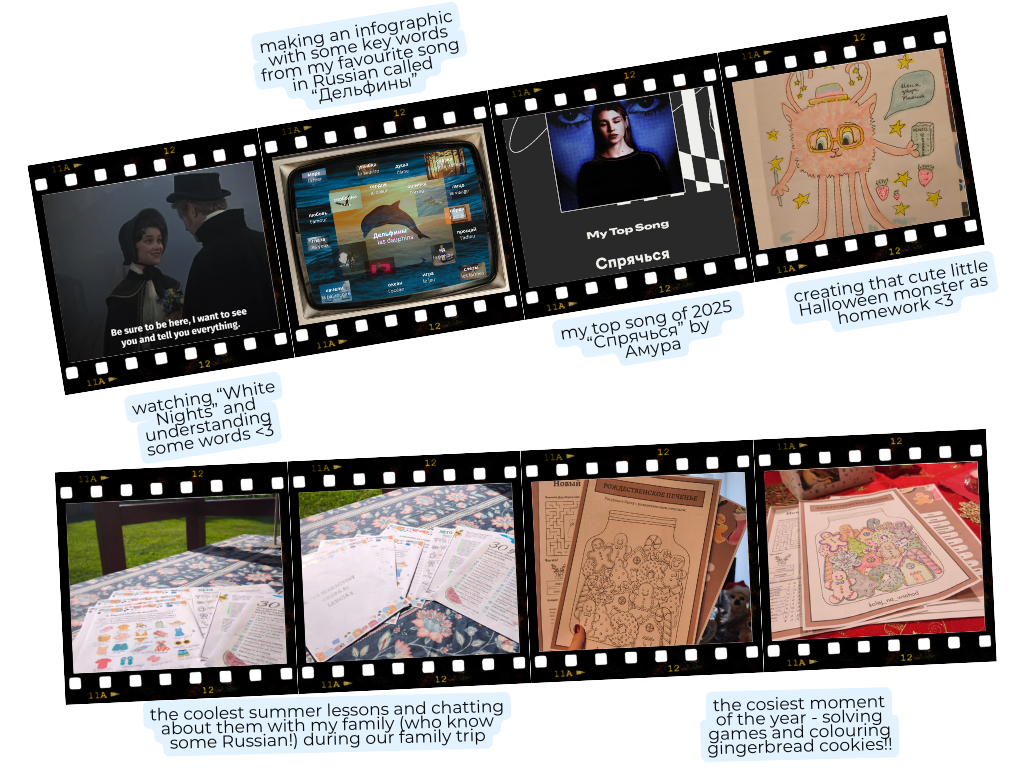
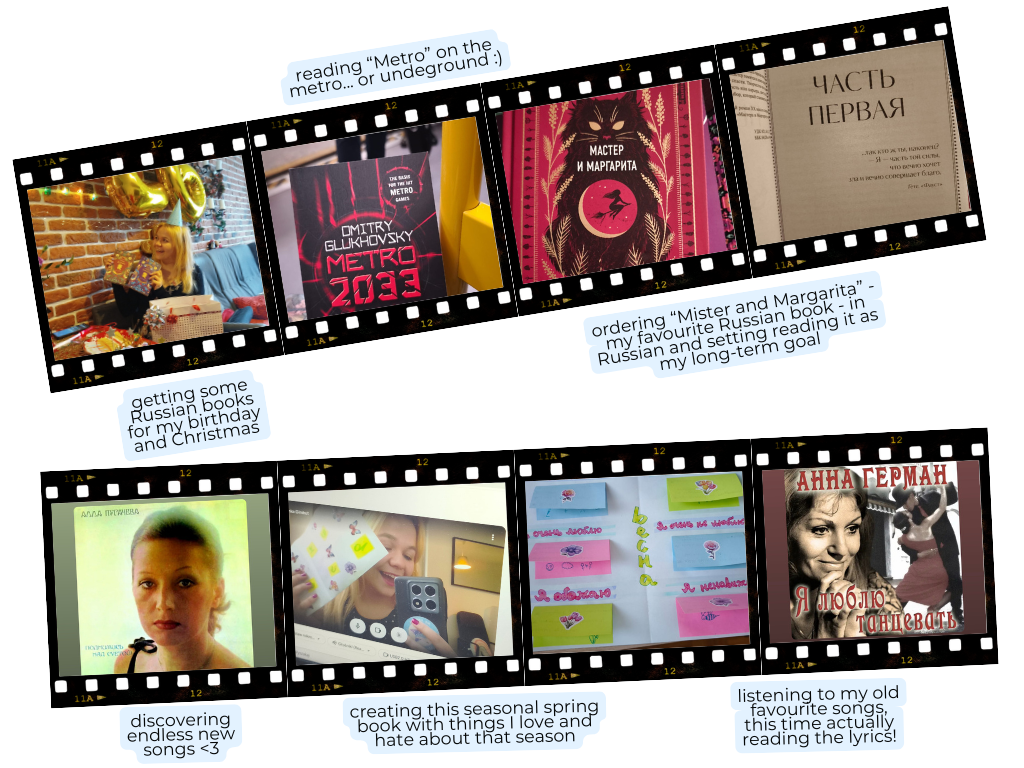
Sometimes, it’s the little milestones that make it all make sense: reading your first longer text; describing your first picture; watching White Nights after a lesson on everyday objects and suddenly recognising words like “letter” and “pen”; listening to ЛУНА and actually being able to follow the lyrics; watching a house tour after a lesson on homes and catching the vocabulary in real use; naturally saying a few sentences about yourself in Russian from memory while walking around the city; finally noticing that you’re reading a little faster; writing automatically after months of feeling like you were carving every single letter into wood… and starting to understand more.
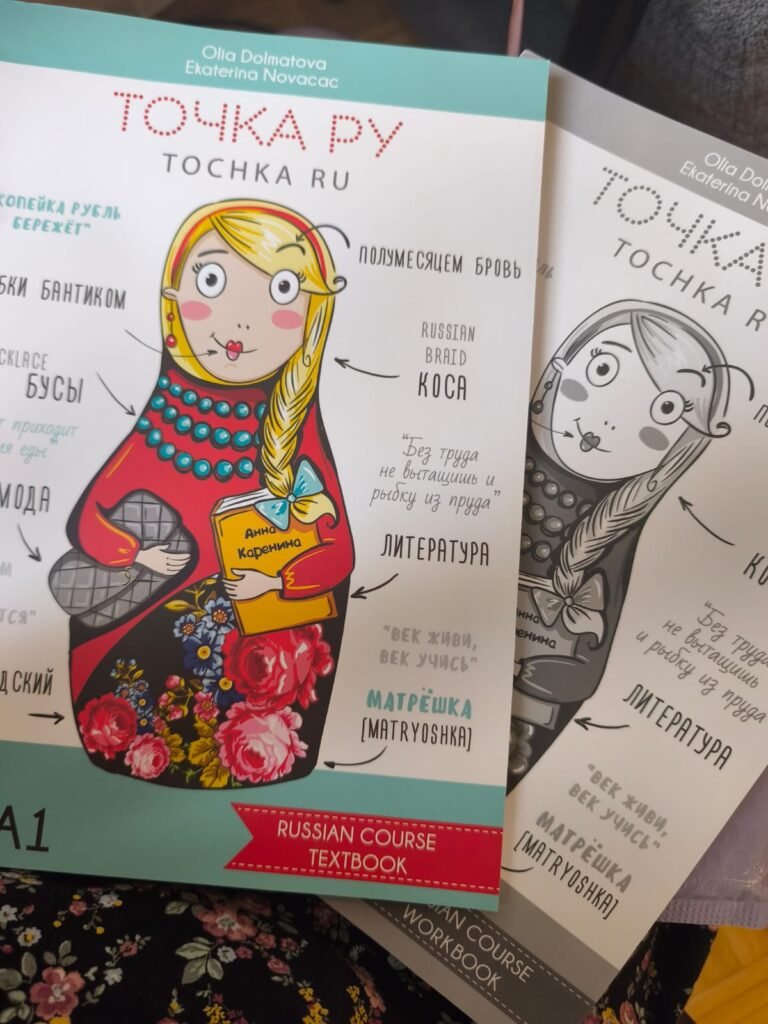
Thank you @kolej_na_wschod for this wonderful journey that broadened my horizons and opened my mind in the best possible ways.
Спасибо 💙
And you? When was the last time you learnt a new language from scratch? How did it feel?